
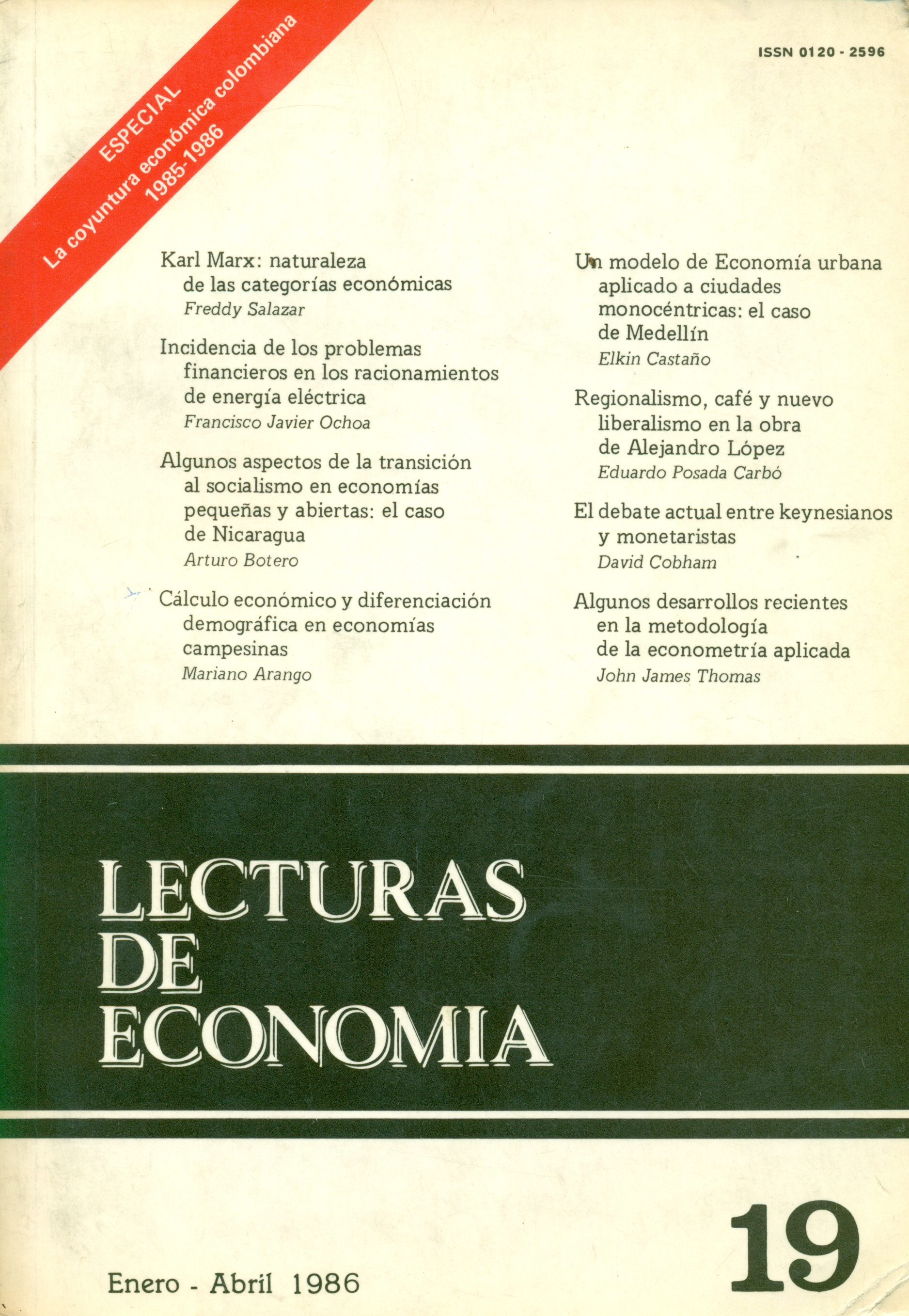
Regionalismo, café y nuevo liberalismo en la obra de Alejandro López
DOI:
https://doi.org/10.17533/udea.le.n19a8076Abstract
• Resumen: Este ensayo explora tres temas: regionalismo, café y "nuevo liberalismo" a partir de dos trabajos de Alejandro López: Problemas colombianos e ldearium liberal. La discusión es planteada alrededor del problema de la nacionalidad, tratando de abrir algunos interrogantes al tema de la formación y consolidación del Estado nacional colombiano ubicando el debate en el contexto histórico del siglo XX. Se pretende situar la obra de Alejandro López en el terreno de las diferencias regionales y de la consolidación del Estado nacional, intentando descubrir las raíces regionalistas del "discurso nacional" de López con el fin de establecer cómo y cuándo se vuelve nacional lo regional en el campo de las ideas.
• Abstract: This essay explores three themes -regionalism, coffee and the “new liberalism” as developed in two works of Alejandro Lopez, Problemas colombianos, and Idearium liberal. The discussion is developed in the context of nationality and explores the theme of the formation and consolidation of the Colombian national state in the historical context of the twentieth century. Lopez, woke is located between regional differences and the consolidation of the national state in an attempt to discover the regional roots of his "discurso nacional" and finally to establish how and when things regional become national in the context of ideas.
Downloads
Downloads
Published
How to Cite
Issue
Section
License
This page, by Universidad de Antioquia, is licensed under a Creative Commons Attribution License.
Authors who publish with this journal agree to retain copyright and grant the journal right of first publication, with the article licensed under a Creative Commons Attribution-NonCommercial-ShareAlike License allowing others to share it as long as they acknowledge its authorship and original publication in this journal.
Authors can enter into separate, additional contractual arrangements for the non-exclusive distribution of the journal's published version of the work (e.g., post it to an institutional repository or publish it in a book), provided that these arrangements be not for profit and the journal be acknowledged as the original source of publication.
Authors are permitted and encouraged to post their papers online (e.g., in institutional repositories or on their websites), as it can lead to valuable exchanges as well as greater citation of the published work.




