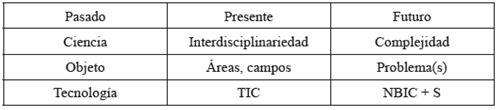
Towards an anthropology of life: elements for understanding the complexity of living systems
DOI:
https://doi.org/10.17533/udea.boan.v31n52a18Keywords:
life sciences, complexity, social and human sciences, synthesisAbstract
In this paper the concept of “anthropology of life” is introduced. In order to do so, rather than an historical overview, a conceptual and theoretical framework is elaborated, in which life appears for the first time in history as a problem, it is an explicit issue of theme. A network of resulting axes, derivations and perspectives is sketched out. At the end, the concept of anthropology of life is made explicit. The exploratory character of this paper aims to highlight the very idea of life and living systems as a process or flux rather than as a state, which is the traditional way how it has been grasped.
Downloads
References
Baluska, Frantisek. y Mancuso, Stefano. (eds.) (2007). Communication in Plants. Neuronal Aspects of Plant Life. Springer Verlag.
Bedau, Mark y Cleland, Carol (eds.) (2010). The Nature of Life: Classical and Contemporary Perspectives from Philosophy and Science. Cambridge University Press, Cambridge.
Bennett, Jane (2010). Vibrant Matter: A Political Ecology of Things. John Hope Franklin Center Book: Duke University Press, Durham.
Broswimmer, Franz J. (2005). Ecocidio. Breve historia de la extinción en masa de las especies. Ed. Laetoli, Pamplona.
Chamovitz, Daniel, (2013). What a Plant Knows. A Field Guide to the Senses. Scientifi American/ Farrar, Straus and Giroux, Nueva York.
De Waals, Frans (1996). Good Natured. The Origins of Right and Wrong in Humans and Other Animals. Harvard University Press. Cambridge, MA-London.
De Waals, Frans (2011). La edad de la empatía. Lecciones de la naturaleza para una sociedad más justa y solidaria. Tusquets, Barcelona.
Descola, Philippe (2013). Beyond Nature and Culture. University of Chicago Press, Chicago.
Douglas Mary (1996). Cómo piensan las instituciones. Alianza Editorial, Madrid.
Foucault, Michel (2004). La naissance de la biopolitique. Cours au Collège de France 1978-79. Seuil, París.
Georgescu-Roegen, Nicholas (1996). La ley de la entropía y el proceso económico. Argentaria, Madrid.
Grusin, Richard (2015). The Nonhuman Turn. University of Minnesota Press, St. Paul.
Hölldobler, Bert y Wilson, Edward O. (1996). Viaje a las hormigas. Una historia de exploración científica. Crítica-Grijalbo, Barcelona.
Ibáñez, Alfonso y Ledezma, Noel Aguirre (2013). Buen vivir, vivir bien. Una utopía en proceso de construcción. Desde Abajo (Colección “Primeros Pasos”), Bogotá.
Klein, Naomi (2007). The Schock Doctrine: The Rise of Disaster Capitalism. Knopf, Nueva York.
Klein, Naomi (2014). This Changes Everything: Capitalism vs the Climate. Simon & Schuster, Nueva York.
Kohn, Eduardo (2013). How Forests Think. Toward and Anthropology beyond the Human. University of California Press, Berkeley.
Lane, Nick (2006). Power, Sex, Suicide. Mitochondria and the Meaning of Life. Oxford University Press, Oxford.
Leaky, Richard y Lewin, Roger (1997). La sexta extinción. El futuro de la vida y de la humanidad. Tusquets, Barcelona.
Lovelock, James (1993). Las edades de Gaia. Una biografía del planeta. Tusquets, Barcelona.
Maldonado, Carlos Eduardo (2009). “Antropología, Historia y Complejidad”. En: Forero Lloreda, Eduardo; López, Carlos Eduardo y Maldonado, Carlos Eduardo (eds.), Complejidad de la arqueología y el turismo cultural: territorios, sostenibilidad y patrimonio. Ed. Universidad del Rosario, Bogotá, pp. 26-42.
Maldonado, Carlos Eduardo (2012a). “Complejidad de las ciencias sociales. Las contribuciones de la antropología”. En: Revista Jangwa Pana, vol. 11, enero-diciembre, pp. 10-26.
Maldonado, Carlos Eduardo (2014). “¿Qué es un sistema complejo?”. En: Revista Colombiana de Filosofía de la Ciencia, vol. 14, N.° 29, pp. 71-93.
Mancuso, Stefano y Viola, Alessandra (2015). Brilliant Green. The Surprising History and Science of Plant Intelligence. Island Press, Washington D. C.
Margulis, Lynn y Sagan, Dorion (2003). Captando genomas. Una teoría del origen de las especies. Kairós, Barcelona.
Maturana, Humberto y Varela, Francisco (1990). El árbol del conocimiento. Las bases biológicas del conocimiento humano. Debate, Madrid.
Nagel, Thomas (1995). “What is it like to be a bat?”. En: Mortal Questions. Cambridge University Press, Cambridge, pp. 165-180.
Odum Eugene Pleasants (1997). Ecology: A Bridge Between Science and Society. Sinauer Associates, Sunderlands, MA.
Passet, René (1996). Principios de bioeconomía. Argentaria, Madrid.
Reeves, Hubert et al. (2009). La historia más bella del mundo. Anagrama, Barcelona.
Simonnet, Dominique et al. (2010). La más bella historia de amor. Fondo de Cultura Económica, México.
Van Potter, Rensselear (1971). Bioethics: Bridge to the Future. Prentice-Hall, Upper Saddle River, N.J.
Vila-Coro, María Dolores (1995). Introducción a la biojurídica. Universidad Complutense de Madrid, Madrid.
Weisman, Alan (2007). El mundo sin nosotros. Debate, Madrid.
Wilson, Edward O. (1994). La diversidad de la vida. Crítica, Barcelona.
Referencias electrónicas
Maldonado, Carlos Eduardo (2012b). “¿Cómo es la complejidad de América Latina? Una reflexión de antropología y complejidad”. [En línea:] http://www.pacarinadelsur.com/nuestra-america/abordajes-y-contiendas/518-como-es-la-complejidad-de-america-latina-una-reflexion-deantropologia-y-complejidad. (Consultado el 25 de agosto del 2016).
Published
How to Cite
Issue
Section
License
Authors who publish in the Bulletin of Anthropology accept the following conditions:
- Authors retain copyright and yield the right of first publication to the journal, with the work registered with Creative Commons attribution license, which allows third parties to use what was published as long as the authorship of the work and the first publication in this magazine are mentioned.
- Authors can perform other independent and additional contractual arrangements for the non - exclusive distribution of the version of the article published in this issue (E.g. Inclusion in an institutional repository or publish it in a book), as long as it is clearly indicated that the work was published for the first time in this magazine.