

Archives
-

Anthropology and Archives: Interdisciplinary Research and Experimentation
Vol. 41 No. 71 (2026)This volume offers a critical reflection on the relationship between anthropology and archives, challenging traditional oppositions such as orality vs. writing, memory vs. history, and fieldwork vs. archival work. Through interdisciplinary dialogue with the social sciences, library and information science, the humanities, and the arts, it explores experiences and trajectories that reveal the active, contested, and contingent nature of archives. The articles gathered here show how documentary materials become key tools in processes of identity affirmation, resistance, and knowledge production, offering new perspectives on the role of the archive in contemporary anthropological practice.
-
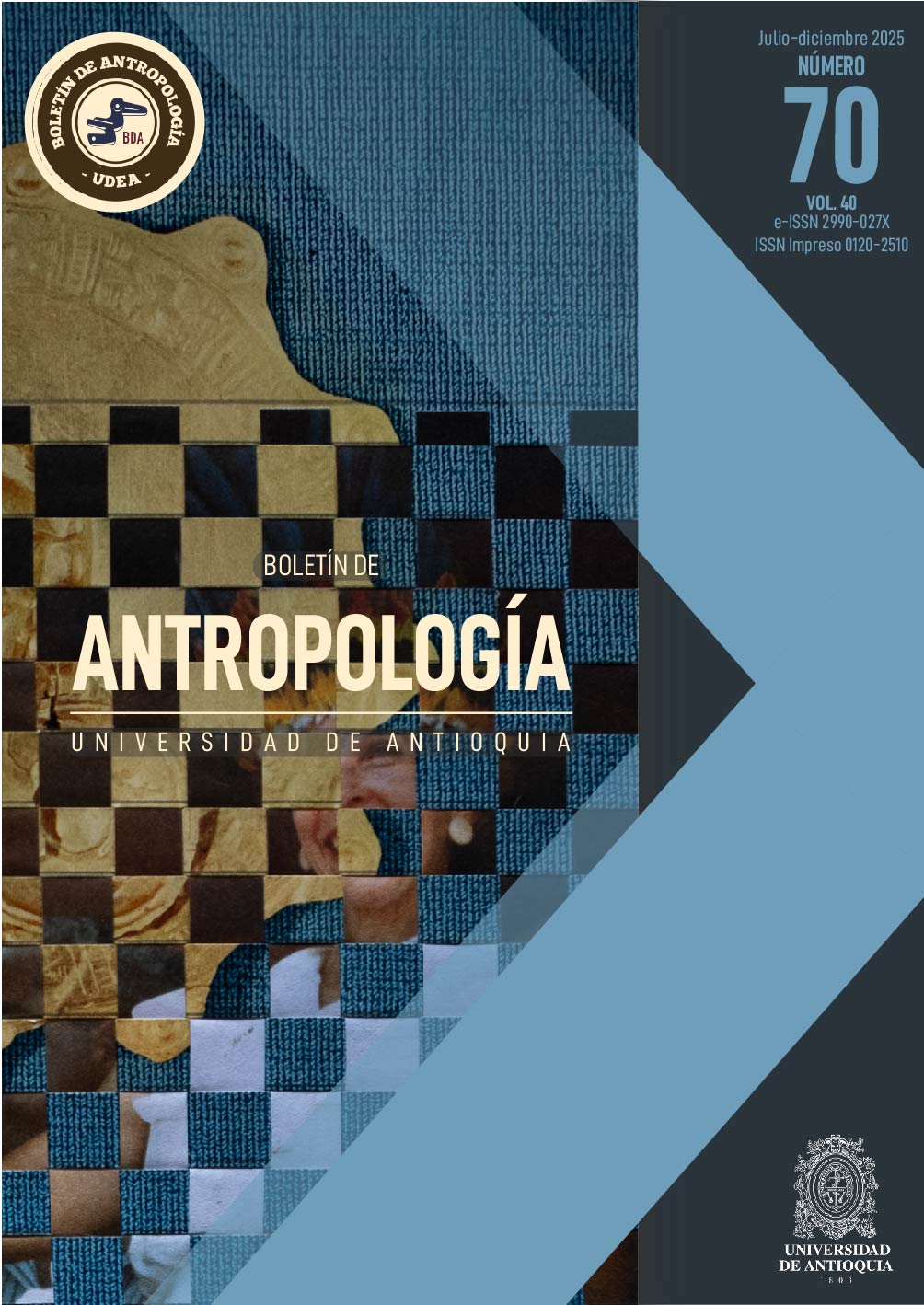
Anthropology and Archives: Interdisciplinary Research and Experimentation
Vol. 40 No. 70 (2025)This volume offers a critical reflection on the relationship between anthropology and archives, challenging traditional oppositions such as orality vs. writing, memory vs. history, and fieldwork vs. archival work. Through interdisciplinary dialogue with the social sciences, library and information science, the humanities, and the arts, it explores experiences and trajectories that reveal the active, contested, and contingent nature of archives. The articles gathered here show how documentary materials become key tools in processes of identity affirmation, resistance, and knowledge production, offering new perspectives on the role of the archive in contemporary anthropological practice.
-
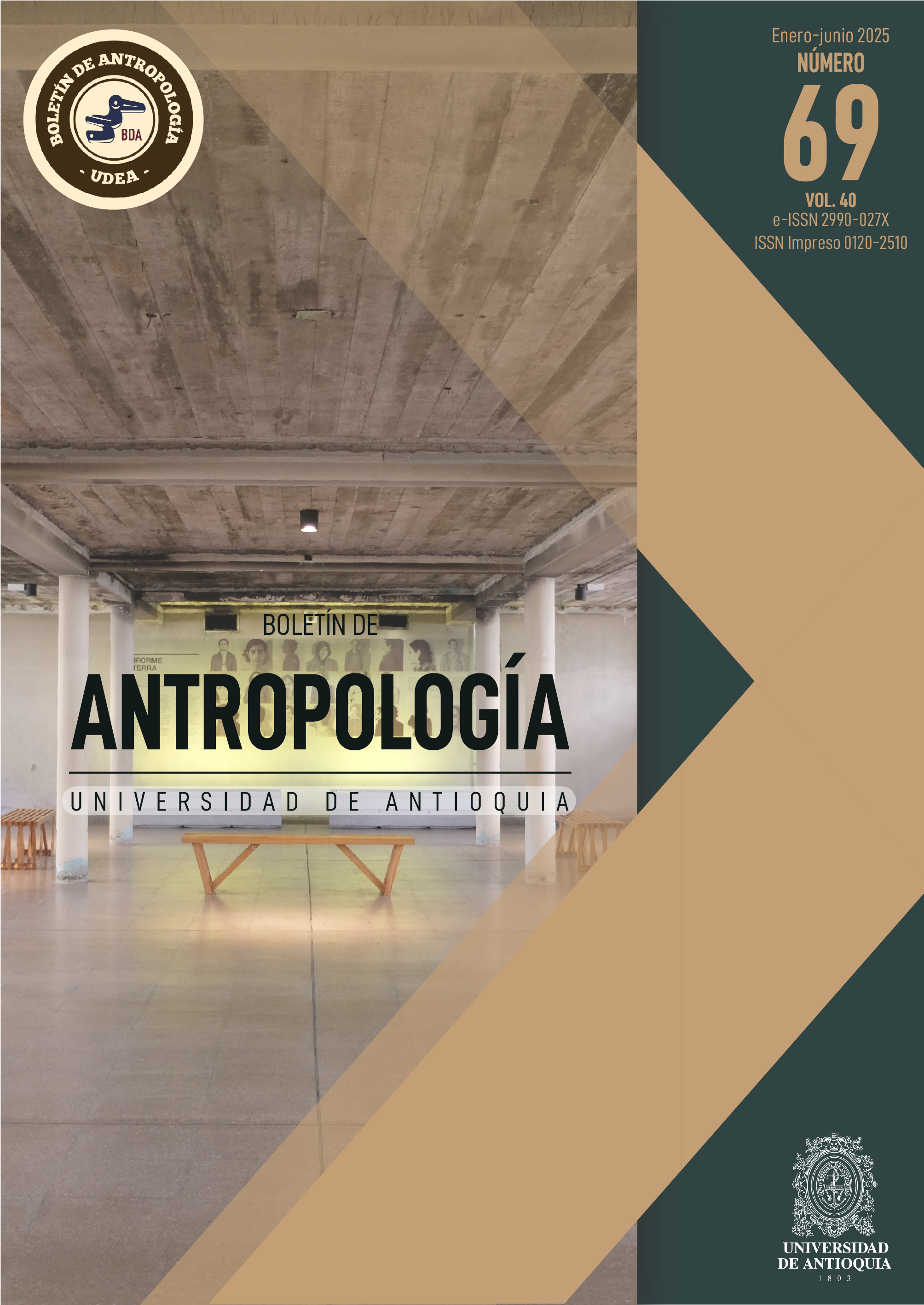
Anthropology and Museums: Critical Perspectives, Transformations, and Challenges
Vol. 40 No. 69 (2025)This volume emerges from the symposium “Anthropology in/from/of museums”, which took place at the VII Congress of the Latin American Anthropological Association in 2024. The contributions gathered here give an account of how contemporary museum spaces are appropriated as places of reflection, cooperation and resistance by a broad group of actors. Through case studies, they address issues such as the decolonization of collections, the redefinition of the museum and its relationship with communities, as well as their challenges and limitations.
-

Anthropology and Museums: Critical Perspectives, Transformations, and Challenges
Vol. 39 No. 68 (2024)In this issue, we are interested in reflecting on the debates and methodologies that have emerged in museum spaces where anthropological practice is challenged by the needs of the interlocutors and participants in the museal exercise. Strategies such as collaborative/shared curation, undisciplined forms in the production of narratives and discourses, curatorial proposals linked to exercises of resistance and resilience, collaborative management of collections and archives, museal action as a mechanism of healing and repair, among others.
-
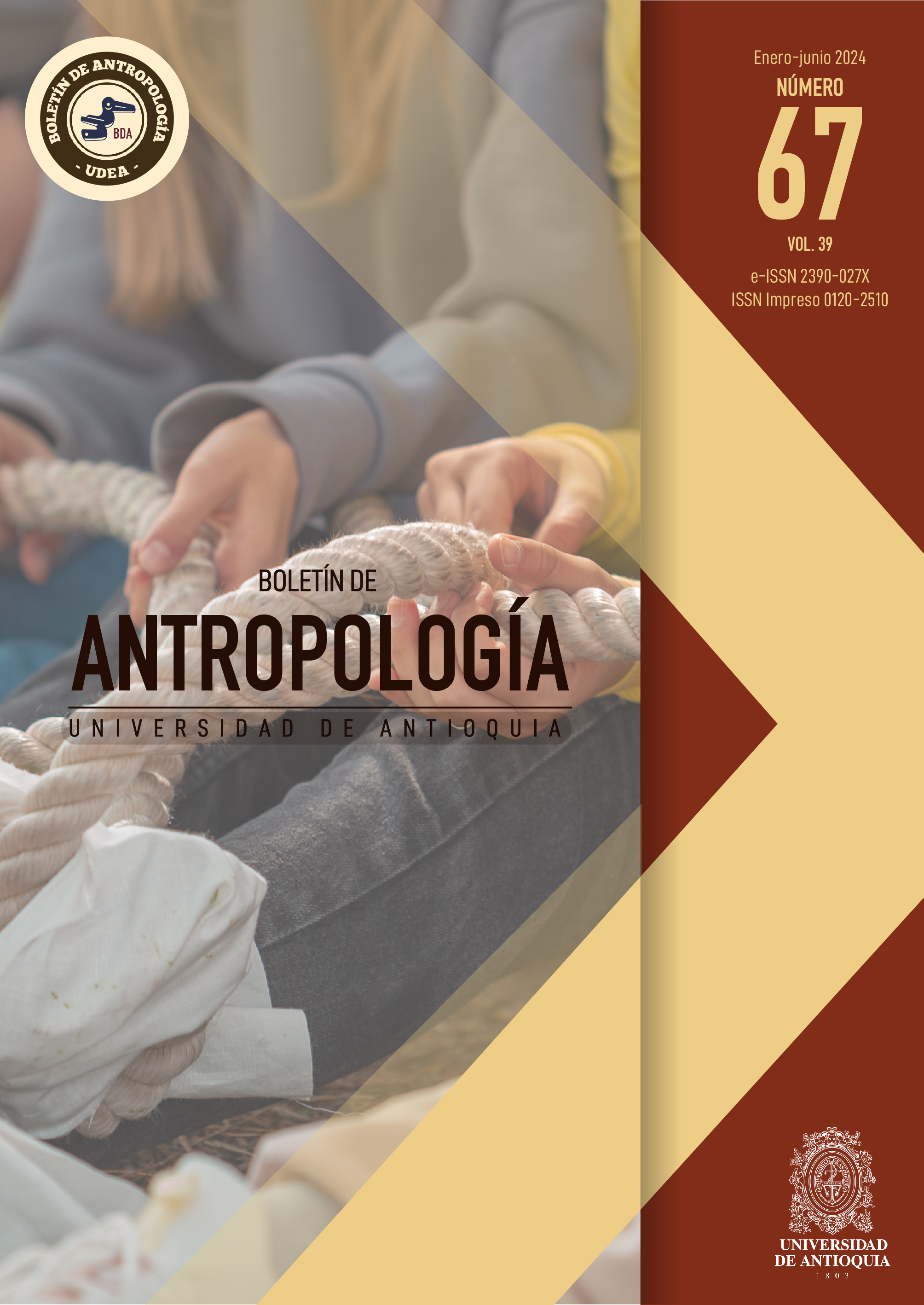
Challenges, dilemmas and tensions of intermediation: reflections from positioned Social Research
Vol. 39 No. 67 (2024)In this volume, we want to show research results or reflections on ongoing research that address the dilemmas and tensions of positioning in the work on mediations and their applications in situated research. We are looking for contributions that examine how researchers reflect on their positioning during their work, and the personal, methodological, epistemic and social costs that this implies for them and the communities, actors, organizations or institutions with which they collaborate. In addition, we are interested in exploring the particularities of the knowledge produced from the mediation between activism and research, and the tensions between academic peers and fellow activists when making decisions and assuming positions. Finally, we want to investigate the new scenarios and contexts for intermediation in research and social science.
-

Latin American Anthropologies: Thresholds and Backgrounds
Vol. 38 No. 66 (2023)This volume aims to gather research on the origins of Latin American anthropologies, focusing on local debates in connection with global contexts. It addresses topics such as the construction of alterity, cultural heritage management, and interactions between specialists and diverse actors. Contributions may explore anthropological practices in law and medicine, collecting and museum formation, intervention policies, artistic and literary reflections, and the creation of institutions by non-governmental actors, many of which have been overlooked in official histories.
-

¿Ordenar el territorio?
Vol. 38 No. 65 (2023)This edition of the Bulletin of Anthropology presents contributions, both from sociocultural analyses and from legal perspectives and their dynamics of spaces involving Land Use Plans, Basic Plans, Land Use Schemes, or others
-

Extractivismo: valoración crítica del modelo, luchas, resistencias y alternativas
Vol. 37 No. 64 (2022)En este número 64 del Boletín de Antropología el dosier sobre extractivismo les presentamos cuatro artículos con reflexiones nacionales, relacionadas con la minería aurífera, la exploración y la extracción de petróleo, los monocultivos extractivistas de café, y sus implicaciones para el medio ambiente local y las comunidades.
En la sección misceláneo encontraremos el artículo “Estudio sobre la especialización en la producción artesanal en el Cercado Grande de los Santuarios, Tunja (Boyacá, Colombia)”, en el cual Milena Daniela Ramos realiza una investigación a partir del análisis de la distribución y la concentración del material lítico encontrado en este sitio.
-

Antropología de los negocios, las empresas, los mercados y los consumidores
Vol. 37 No. 63 (2022)En este número 63 del Boletín de Antropología, presentamos de qué manera la antropología social como disciplina se ha movido sustancialmente desde su origen decimonónico donde encontramos que el nombre de la metodología por excelencia, la etnografía (la escritura de los pueblos étnicos), es evidentemente un arcaísmo. Hoy el grueso de la labor antropológica se realiza en las ciudades y en contextos no étnicos. Las ofertas laborales para los recién egresados, en su gran mayoría, no están en los centros educativos, ni con los indígenas, tampoco con los afrodescendientes. Por el contrario, en nuestro contexto de manera relativamente reciente, en países del Norte hace muchos más años desde la década de 1980, la ciencia del hombre ha recibido particular atención desde los universos empresariales, de la publicidad, del diseño de negocios, desde áreas de conocimiento del cliente. Allí han entendido que una aproximación a los hábitos de consumo, mundos de vida, percepciones y gustos de los clientes y usuarios, es fundamental tanto para iniciar negocios, para lanzar productos, como para mantener o hacer crecer los que ya están funcionando.
-

Música, interacción, sociedad y cultura
Vol. 36 No. 62 (2021)En este número 62 del Boletín de Antropología, presentamos contribuciones que reflexionan sobre estas relaciones que se despliegan a partir de la música. Abordamos así las preguntas: ¿Cómo las sonoridades generan o facilitan diversos tipos de interacciones entre sujetos? ¿De qué manera devienen en elemento fundamental en la socialización de las comunidades?
Estas interacciones y socializaciones musicales en su permanencia devienen en cultura; consecuentemente la música puede convertirse en un habitus sirviendo como estructura, que mantiene viva y actualiza a la propia cultura, estructurante de las relaciones sociales.
-

El cuerpo, el centro: perspectivas bioculturales en antropología y bioarqueología
Vol. 35 No. 60 (2020) -

Vol. 30 No. 49 (2015)
Dado que la edición número 48, dedicada a la Antropología Ambiental, tuvo tanta acogida, en esta edición del Boletín de Antropología incluimos cuatro artículos dedicados al mismo tema, además de los artículos que abordan otros temas.




1-25 of 62
Next


